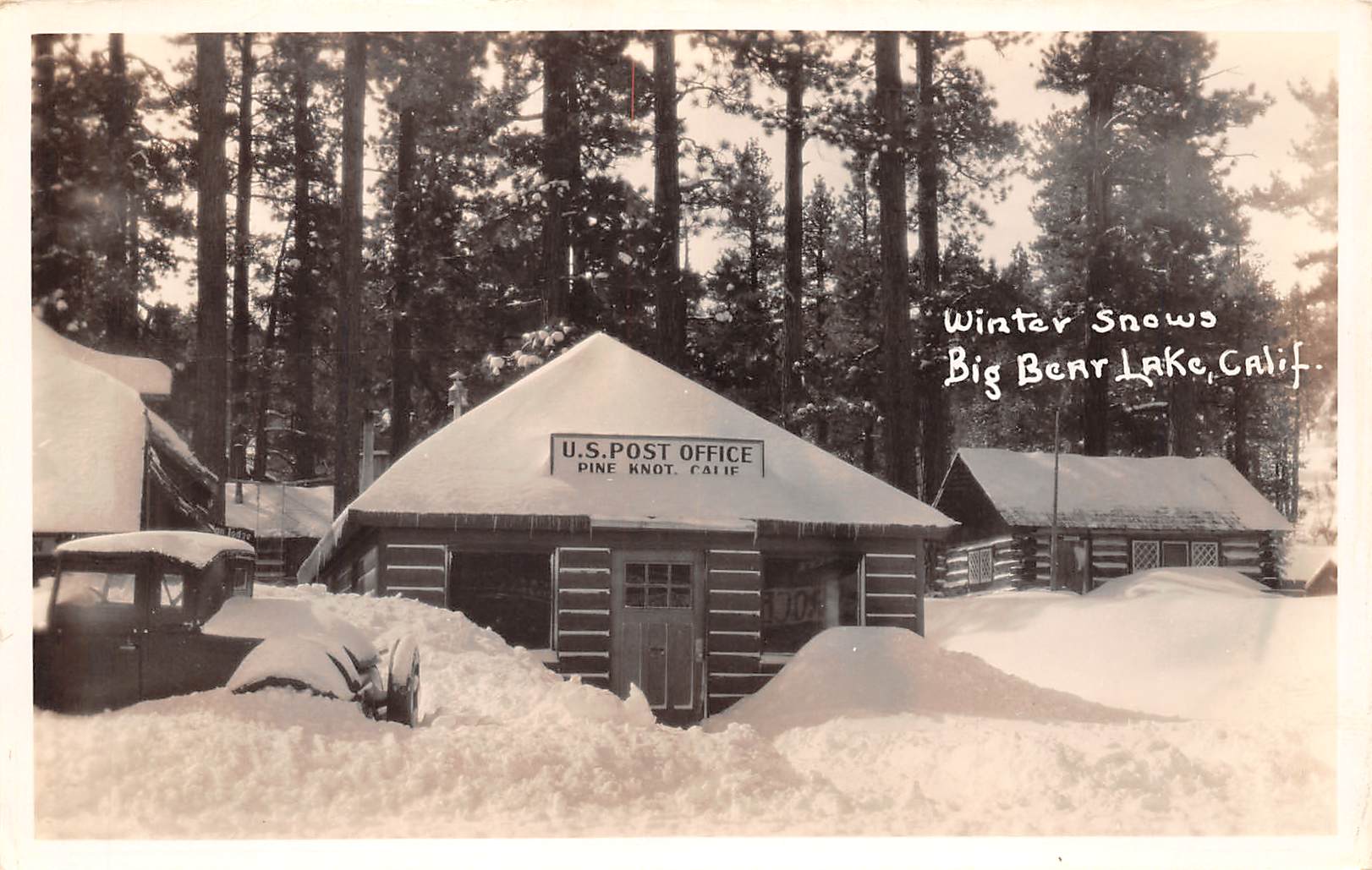
Big Bear, California, is known today as a mountain destination where snow is central to winter recreation, tourism, and the local landscape. However, the area’s relationship with snowfall goes back well beyond the modern ski and vacation industry. Located at a high elevation in the San Bernardino Mountains, Big Bear receives winter precipitation very different from what much of Southern California experiences. Historical weather records show that significant snowfall has been part of the Big Bear climate for generations. NOAA records for the Big Bear Lake weather station provide a long history of snowfall measurements, with compiled datasets extending back more than a century. The elevation helps explain why snow has remained such a recognizable part of the region’s identity. While snowfall naturally varies from one winter to another, the historical record shows that Big Bear has experienced both relatively light seasons and extraordinary periods of heavy snow. Understanding that history helps you better appreciate why snow is such an important natural feature of Big Bear and why changes in winter conditions deserve attention.
Big Bear’s Typical Snowfall Patterns
Historical averages help put Big Bear’s snowfall into perspective. NOAA’s 1991–2020 climate normals for the Big Bear Lake station show an average annual snowfall of about 58.6 inches. February has the highest average monthly snowfall at 14.3 inches, followed by January at 13.4 inches and March at 11.7 inches. December also contributes significantly, averaging 11 inches. Snowfall can begin earlier or continue later than these averages suggest, but the core of the snow season generally occurs during the colder months. The same long-term data also shows why a single winter should not describe Big Bear’s entire snow history. Snowfall can vary considerably from year to year, and even within a single month, totals can differ widely depending on storm activity. Some winters bring repeated snowstorms and prolonged snow cover, while others produce much less accumulation. For residents, businesses, visitors, and organizations concerned about the future of Big Bear’s winter environment, these historical variations provide important context for understanding what makes the region’s snow patterns distinctive.


Some Big Bear Winters Have Been Extraordinary
Big Bear’s history includes snowfall totals far beyond the long-term average. According to historical NOAA records, the snowiest winter season occurred in 1951–1952, when approximately 218.1 inches of snow were recorded. The calendar year 1952 was also the snowiest year in the historical record, with 265.6 inches of snowfall. These numbers show just how dramatically conditions can change during an especially active snow period. Big Bear has also experienced individual storms capable of producing remarkable amounts of snow in a short time. Historical records identify January 30, 1922, as the date with the greatest single-day snowfall, when approximately 36 inches were recorded. Other major snow events occurred throughout the twentieth and early twenty-first centuries, including substantial storms in 1948, 1952, 1969, 1990, 2008, 2010, 2019, and 2023. These events are reminders that heavy snow has always been part of Big Bear’s history, even though such storms do not occur every year. Looking at extremes alongside averages provides a fuller picture of the area’s natural snowfall patterns.
Snow Has Shaped Big Bear’s Identity
Snow is more than a weather statistic in Big Bear. It has influenced the area’s recreation, tourism, economy, transportation, and seasonal traditions for generations. Winter visitors come to experience snowy mountain scenery, enjoy outdoor activities, and take in a landscape that looks dramatically different from the surrounding Southern California communities. Historical snowfall has helped establish Big Bear as one of the region’s best-known mountain winter destinations. At the same time, heavy snow can create challenges, including difficult travel conditions, road closures, changing access to mountain communities, and increased demands on local infrastructure. Historical weather reports from the National Weather Service document numerous major mountain snow events that affected roads and communities across the San Bernardino Mountains. This history shows that snow can be both an important resource and a significant environmental factor. Looking at Big Bear’s past shows why preserving the conditions that support its winter environment matters to the community and to people who value the area’s unique mountain character.
Why Big Bear’s Snow History Matters Today
Understanding Big Bear’s snowfall history can help you appreciate why snow remains such an important part of the community, environment, and winter experience. The Saving Our Snow Foundation raises awareness about how human activity can affect snowfall and winter environments while promoting education, community outreach, and sustainable practices. You can support this mission by learning more about Big Bear’s snow history, sharing information with others, participating in outreach, or encouraging your community to stay engaged with winter environmental issues. To learn more about environmental education and how you can support efforts to keep snow and winter environments important for future generations, call Saving Our Snow Foundation at (858) 214-4684 today and get involved.
Recent Post

Tracking winter conditions, learning local weather patterns, and sharing reliable information can help communities have more informed conversations about how climate change may affect their snow-dependent environments.
When you understand snow's broader role, it becomes easier to see why changes in snowfall, temperature, and snowpack deserve attention.